Prickly Pear Seed Oil: Why It’s Worth More Than Gold in Skincare
There’s a reason prickly pear seed oil costs more per litre to produce than argan oil – and considerably more than most other plant oils used in premium skincare. To extract a single litre of prickly pear seed oil, you need roughly a tonne of prickly pear fruit, and each fruit contains tiny seeds that must be separated by hand. It is, by any measure, one of the most labour-intensive beauty oils in the world to produce.
But if you’ve ever used a skincare product containing genuine prickly pear seed oil – also known by its botanical name Opuntia Ficus-Indica Seed Oil – you’ll understand immediately why people keep buying it.
This article explores exactly what makes prickly pear seed oil so extraordinary, the science behind its skin benefits, and how it works in combination with argan oil to create a genuinely transformative night treatment.
What Is Prickly Pear Seed Oil?
Prickly pear seed oil is extracted from the tiny seeds of the prickly pear cactus (Opuntia ficus-indica), a plant that grows widely in Morocco, Mexico, and other arid regions. While the cactus itself is relatively common, the oil extracted from its seeds is exceptionally rare by virtue of the sheer quantity of fruit needed to produce even small amounts.
The oil has been used in traditional Moroccan and North African beauty practices for generations, though it has only recently gained widespread recognition in the global skincare market. Now, it appears in some of the world’s most expensive serums and oils – and for good reason.
The Extraordinary Nutrient Profile of Prickly Pear Seed Oil

Vitamin E Content That Rivals Nothing Else
Prickly pear seed oil contains one of the highest concentrations of tocopherols (Vitamin E) of any plant oil – significantly higher even than argan oil, which is already celebrated for its Vitamin E content. Some analyses have found tocopherol levels of over 1,000mg per kg in cold-pressed prickly pear seed oil. This exceptional antioxidant density makes it a powerful fighter against free radical damage, UV-induced skin ageing, and environmental stress.
Linoleic Acid: The Fatty Acid Your Skin Really Needs
Prickly pear seed oil is rich in linoleic acid (omega-6), making up around 60% of its fatty acid content. Linoleic acid is an essential fatty acid – the body cannot produce it, so your skin must obtain it from external sources. It plays a critical role in maintaining the skin’s lipid barrier, regulating moisture loss, and keeping skin plump, smooth, and resilient. Research has shown that deficiency in linoleic acid is directly associated with dry, rough, and inflamed skin.
Betalains: Rare Pigments With Anti-Inflammatory Power
Prickly pear seed oil contains betalains – water-soluble pigments that give prickly pear fruit its vibrant colour and also act as potent anti-inflammatory and antioxidant agents. These compounds are unusual in the plant world and are largely absent from other skincare oils, making prickly pear seed oil genuinely unique in its biochemical profile.
Phytosterols: Supporting the Skin Barrier
Phytosterols (plant sterols) in prickly pear seed oil help strengthen the skin’s natural barrier function, reduce transepidermal water loss (TEWL), and improve the skin’s response to irritation. They have a structure similar to cholesterol – a key component of healthy skin cell membranes – and are readily recognised and absorbed by the skin.
Staff picks
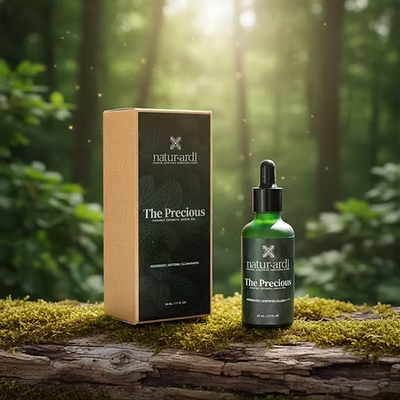
What Prickly Pear Seed Oil Does for Your Skin
Given this impressive nutrient profile, it’s no surprise that prickly pear seed oil has a broad range of skin benefits:
Intense hydration: Its high linoleic acid content combined with phytosterols makes it one of the most effective oils for restoring moisture to dry, dehydrated skin. Unlike heavy oils that sit on the surface, prickly pear seed oil absorbs readily without residue.
Brightening and radiance: Anecdotally and in clinical observations, regular use of prickly pear seed oil is associated with a more even, luminous skin tone. The high antioxidant content may help inhibit melanin overproduction, reducing the appearance of dark spots and uneven pigmentation over time.
Anti-ageing: The combination of Vitamin E, betalains, and linoleic acid addresses multiple contributors to skin ageing simultaneously – oxidative stress, loss of elasticity, moisture depletion, and barrier compromise.
Soothing sensitive skin: The anti-inflammatory compounds in prickly pear seed oil make it suitable even for reactive, sensitive skin. It calms redness and irritation without triggering further sensitivity.
Improving elasticity: Regular use appears to improve skin’s elasticity and firmness, likely due to the combined action of linoleic acid on barrier repair and the antioxidant protection against collagen degradation.
Why Prickly Pear and Argan Oil Make the Perfect Combination
On their own, both argan oil and prickly pear seed oil are exceptional skincare ingredients. Together, they become even more effective – and this is the principle behind Natur.ardi’s Argan & Prickly Pear Night Cream.
Argan oil contributes oleic acid (deeply moisturising and skin-softening) and its own substantial Vitamin E content, while prickly pear adds its extraordinary antioxidant density and linoleic acid richness. The two oils have complementary fatty acid profiles that together cover the full spectrum of what the skin’s lipid barrier needs to function optimally.
In a night cream formulation, both ingredients work during the skin’s natural nocturnal repair cycle – when cell turnover is at its peak and the skin is most receptive to nourishment. This is why a night cream containing both oils can produce noticeably different results from a daytime moisturiser using the same ingredients.
FAQ: Prickly Pear Seed Oil
Q: Why is prickly pear seed oil so expensive?
A: Producing a single litre of prickly pear seed oil requires approximately one tonne of prickly pear fruit and a labour-intensive extraction process. This scarcity drives its premium price.
Q: Is prickly pear seed oil suitable for oily skin?
A: Yes. Its high linoleic acid content may help regulate sebum production, and its lightweight texture means it won’t leave skin feeling greasy.
Q: How quickly will I see results from prickly pear seed oil?
A: Many users report improved hydration and skin softness after just one or two uses. Longer-term benefits – such as improved elasticity and reduced dark spots – become more noticeable after four to six weeks of consistent use.
Q: Can pregnant women use prickly pear seed oil?
A: Topically applied prickly pear seed oil is generally considered safe. However, always consult your healthcare provider if you’re pregnant or breastfeeding before introducing new skincare products.
Q: What is the difference between prickly pear seed oil and prickly pear extract?
A: The seed oil is extracted from the seeds inside the fruit and contains the concentrated fatty acids and Vitamin E. Prickly pear extract is typically made from the fruit flesh or skin and contains different compounds, including betalains and polysaccharides, with more moisturising and soothing properties.
Conclusion: The Rarest Oil in Your Skincare Deserves to Be Used Every Night
Prickly pear seed oil is not a trend or a marketing gimmick. Its extraordinary antioxidant content, unique anti-inflammatory compounds, and proven ability to improve skin hydration, tone, and elasticity make it one of the most scientifically compelling skincare ingredients available today.
The reason it appears in Natur.ardi’s Argan & Prickly Pear Night Cream is simple: it works. Combined with organic argan oil, niacinamide, shea butter, and pro-Vitamin B5, it creates a night cream that genuinely earns a place in your nightly routine.
If you’ve been wondering whether the premium price of prickly pear seed oil products is justified – now you know. It most certainly is. Try Natur.ardi’s Night Cream tonight and wake up to skin that proves it.